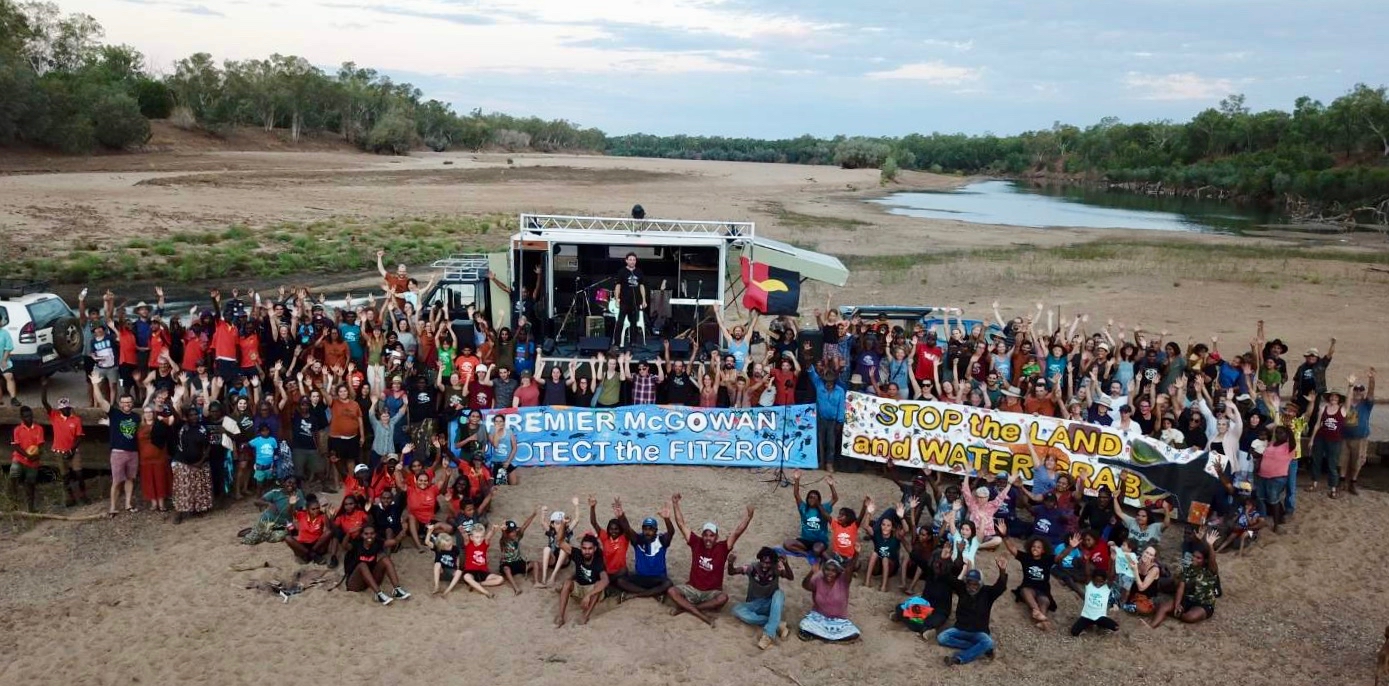
An alliance of key conservation groups is warning that Western Australia is approaching a critical decision point for the future of the Martuwarra Fitzroy River, urging the State Government to put protection of the river, strong governance and Traditional Owner leadership at the centre of any decision about water use in the catchment.
The Martuwarra Fitzroy River is one of Australia’s largest and most intact river systems - National Heritage listed for its indigenous cultural values. It is the lifeblood of the Kimberley, sustaining culture, communities, wildlife, fishing and the health of the Kimberley coast. As the WA Government considers decisions that could allow increased water extraction from the Fitzroy catchment, the Kimberley: Like Nowhere Else alliance says recent findings from the WA Auditor General exposed serious weaknesses in the system meant to protect rivers like the Martuwarra.
“The WA Auditor General has made it clear that our current water licensing system cannot demonstrate water is being taken sustainably,” said Mitch Hart, WA Manager for The Pew Charitable Trusts.
“In a vast, sparsely populated and data poor catchment like the Martuwarra Fitzroy, that’s a serious warning. Weak monitoring and enforcement mean small decisions can quietly add up to big, irreversible impacts - and by the time you see the damage, it’s too late to undo it.”
The alliance warns that further groundwater extraction poses long-term risks for the Martuwarra. During the long dry season, when surface flows stop, groundwater slowly feeds the deep pools, springs and wetlands that keep the river alive. These refuge pools support fish, wildlife, drinking water supplies and cultural practices until the next wet season arrives.
In the region, groundwater refills slowly and irregularly - often only during very large flood years. Pumping groundwater lowers pressure in the aquifers over large distances, which can reduce flows to pools and springs far from where water is taken. Because the system is highly variable and not fully understood, even modest drawdown can have lasting impacts.
“People here know the river doesn’t stop working just because the wet season ends,” said Martin Pritchard, Executive Director of Environs Kimberley.
“Groundwater is what keeps the Martuwarra alive through the long dry months - the waterholes, the fish, the places families rely on. If that groundwater is drawn down, those places can shrink or disappear, and there’s no quick fix. Once it’s gone, it’s gone.”
“Most Australian rivers were over‑allocated before impacts were understood - and communities are still living with the consequences. We cannot let the Martuwarra Fitzroy become the next Murray–Darling.”
The alliance emphasises that it supports economic development but says that there are many forms of development that do not require extracting water and that any development must work alongside protection of the river - not undermine it.
“A good water plan must start with no surface water take and by significantly limiting any groundwater extraction with a strong, ongoing role for Traditional Owners in decision-making, monitoring and management,” said Mr Hart.
“Traditional Owners have cared for the Martuwarra for tens of thousands of years and hold deep, continuous knowledge of the river and its surrounds. Strengthening their role in governance is not only a matter of justice, but a practical response to the risks identified by the Auditor General.”
The alliance also points to Labor’s 2017 election promise to protect the Martuwarra Fitzroy River, and the government’s 2023 Fitzroy–Derby water planning policy principles, which commit to precaution, sustainability, no damming of the river, no additional surface water licensing, and stronger Traditional Owner involvement.
“This is a defining moment for Western Australia. The last time the WA Government asked for public input on a plan for the Martuwarra, more than 43,000 people – including thousands in the Kimberley region – called for protection of the river with increased Traditional Owner input. The Cook Government can choose to protect the Martuwarra Fitzroy for future generations - or it can open the door to pressures that cannot be undone,” said Mr Pritchard.